

What Are Alternative Investments and How Do They Differ from Traditional Investments?
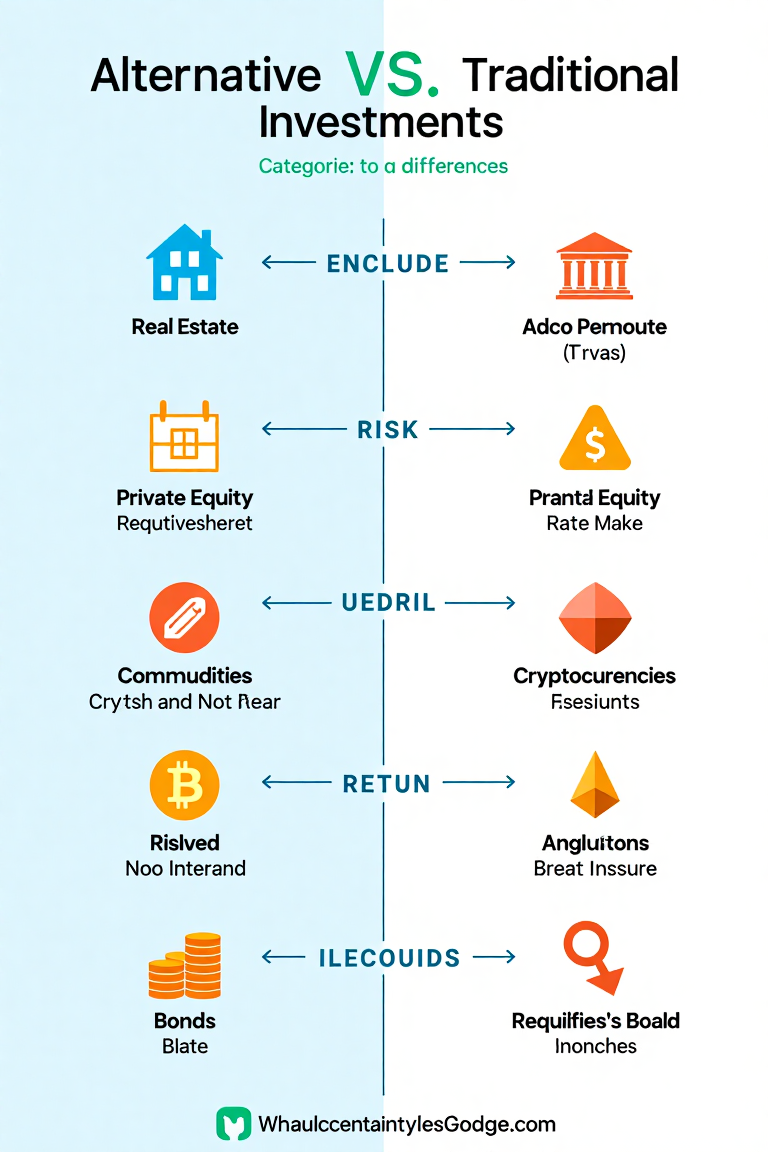
Alternative investments refer to a broad range of investment options beyond traditional stocks, bonds, and cash. These investments offer opportunities for diversification, risk management, and the potential for higher returns. They often appeal to investors seeking to expand their portfolios with non-traditional assets.
In this post, we will explore what alternative investments are, their characteristics, and how they differ from traditional investments like equities and fixed-income securities.
What Are Alternative Investments?
Alternative investments encompass a variety of asset classes, including:
- Real Estate: Investing in physical property or real estate funds. Real estate offers potential for appreciation, rental income, and portfolio diversification.
- Private Equity: Investments in private companies or startups that are not publicly traded. These investments are typically illiquid but can offer high returns if the company succeeds.
- Hedge Funds: Pooled investment funds that employ various strategies to generate returns, often using leverage, derivatives, or short-selling techniques. They are usually reserved for accredited investors.
- Commodities: Physical assets like gold, silver, oil, and agricultural products. Commodities are often seen as a hedge against inflation and market volatility.
- Cryptocurrencies: Digital currencies such as Bitcoin, Ethereum, and other altcoins. Cryptocurrencies are highly volatile but offer high-growth potential and serve as a diversification tool.
- Venture Capital: Funding startups or emerging businesses that have high growth potential. Like private equity, this type of investment is high-risk but can yield significant returns.
- Collectibles and Art: Investing in rare or unique items such as artwork, vintage cars, and antiques. These assets can appreciate over time and provide a store of value.
How Do They Differ from Traditional Investments?
- Liquidity:
- Traditional Investments: Stocks, bonds, and mutual funds are typically liquid, meaning they can be bought or sold quickly.
- Alternative Investments: Many alternative assets, such as real estate or private equity, are illiquid, meaning it may take longer to sell and access funds.
- Risk and Return:
- Traditional Investments: Stocks and bonds are more predictable and often tied to market indices. Stocks can offer high returns but are subject to market volatility.
- Alternative Investments: These tend to have higher risks, especially in the case of private equity or venture capital, but they can also offer higher returns. The risk varies greatly depending on the asset class.
- Diversification:
- Traditional Investments: Investors typically diversify within stocks, bonds, or mutual funds, but their exposure remains limited to traditional markets.
- Alternative Investments: These offer the opportunity to diversify beyond traditional markets, reducing risk and improving portfolio resilience against market fluctuations.
- Regulation:
- Traditional Investments: Stock exchanges and bonds are highly regulated, with established rules to protect investors.
- Alternative Investments: These assets are often less regulated, which can lead to more risk but also offer greater opportunities for profit.
- Access:
- Traditional Investments: Anyone can buy stocks, bonds, or mutual funds through brokers or online platforms.
- Alternative Investments: Access to alternative investments is often limited to accredited or institutional investors. Some alternative assets, like real estate or private equity, require higher minimum investments.
Why Consider Alternative Investments?
Alternative investments can provide several benefits for investors:
- Diversification: By including non-correlated assets in your portfolio, you can spread risk and reduce overall volatility.
- Potential for High Returns: While riskier, many alternative assets have the potential for higher returns compared to traditional investments.
- Inflation Hedge: Commodities like gold and real estate can act as a hedge against inflation, preserving value in times of economic uncertainty.
- Access to Unique Markets: Investing in startups, private equity, or venture capital can offer opportunities to access high-growth, emerging markets not available through public markets.
Conclusion
Alternative investments offer a unique set of opportunities and challenges. By including them in your portfolio, you can achieve better diversification, reduce risk, and potentially increase returns. However, it’s important to understand the specific characteristics, risks, and liquidity concerns of these investments before diving in.
If you’re interested in expanding your investment portfolio beyond traditional stocks and bonds, alternative investments might be worth considering.